

Why do my dog's ears keep getting infected?
Hearthstone Animal Clinic, Cypress TX · vet since 2000
Why do my dog's ears keep getting infected?
You cleaned the ears, you finished the drops, and two months later you can smell it again. That's common, and it doesn't mean you did anything wrong. Ears bring a lot of itchy dogs into my Cypress exam room.
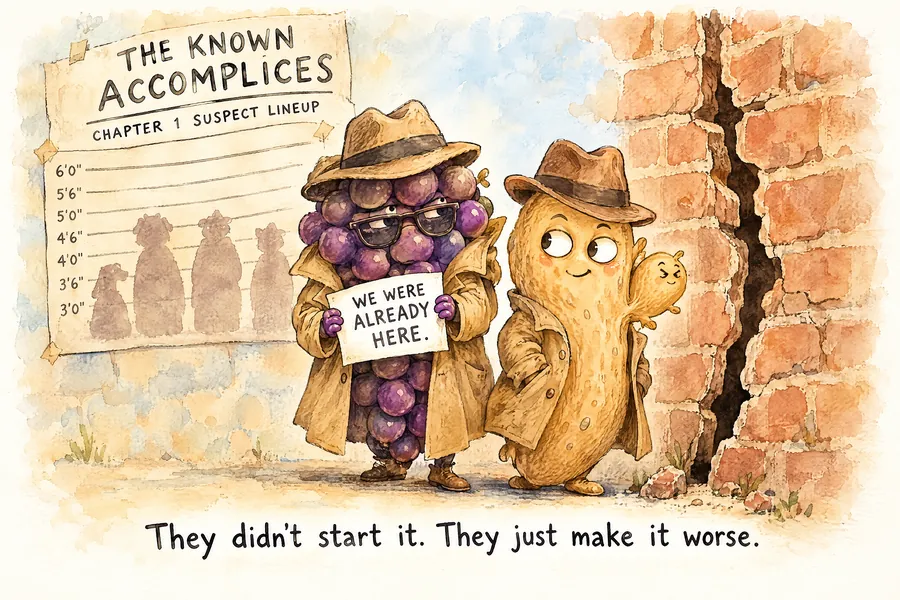
An ear infection that keeps coming back is almost never bad luck. There's nearly always something underneath it, and most often it's allergy. The ear canal is lined with skin, the same allergic skin as the rest of the dog. When it flares, the yeast and bacteria that normally live there in small numbers get their chance.
In a study of 100 dogs with ear infections, published in Veterinary Dermatology, allergy was the most common cause underneath (43 of the 100 dogs), and most of the cases were the chronic, keep-coming-back kind. Yeast was the most common thing growing on top, in 66 of them.
Take Biscuit, one of our cartoon dogs. Drops in August, a quiet ear, and by October she's rubbing it on the carpet again. The drops did their job. Nobody treated the allergy.
Why do ears get infected so easily?
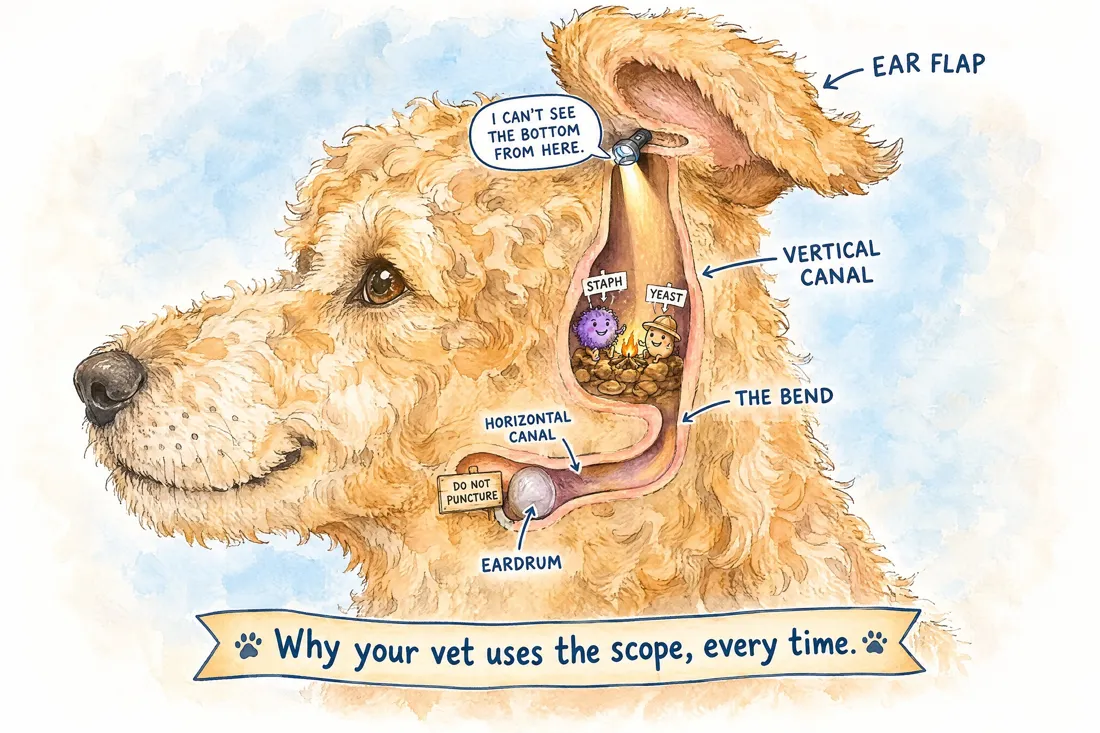
Part of it is the shape. A dog's ear canal runs down, then turns in toward the eardrum, like a capital L. The bottom stays warm, dark and damp, which yeast and bacteria love, and you can't see the eardrum from outside. Your vet needs the scope to look around that corner.
Floppy ears, narrow canals and swimming make it easier, and so does Houston humidity. Around here, all of summer is ear season.
The other part is the allergy. The veterinary dermatology guidelines list the inside of the ear flap among the most common itchy spots in allergic dogs, and they count yeast infections that keep coming back as one of the clues.
What does a bad ear look like?
- Head shaking, scratching, or rubbing the ear on the carpet
- A red, swollen canal with a sour or musty smell
- Brown waxy gunk or yellow-green pus
- Pain when you touch it
If you're seeing that, it needs a look. Your vet will usually check a swab under the microscope to see whether it's yeast, bacteria or both, because they need different medicine. The exam and swab cost more than a bottle of cleaner off the shelf, but they keep you from paying for the wrong drops twice.
Does it matter when the ears flare?
Yes. When the ears flare is one of the best clues to why.
- Ears all year: think food allergy first. Sometimes the ears are the only sign.
- Ears that started with the seasons and then turned year-round: that's classic atopy, the allergy to pollen, dust mites and mold.
If yours started with the seasons, the itch forecast shows what's in the air in your ZIP today. Your vet will also rule out the less common causes, like low thyroid, Cushing's disease, skin-oil problems, a grass awn (foxtail) stuck down the canal, and ear mites, mostly in young dogs.
How do I stop the ear infections from coming back?
Treat the infection and work up the allergy, or it keeps coming back. That's the order of work on my itch ladder: fleas first, then a food trial, then the environment.
Ask your vet how often to clean. More isn't better, and over-cleaning can keep an ear sore. And once an in-clinic ear medicine goes in, don't clean that ear until the recheck unless your vet says so.
Ears that stay inflamed for years thicken, narrow and scar, tougher bacteria move in, and at the far end of that road is surgery to remove the ear canal. Catching each flare early and controlling the allergy keeps you off that road.
When can an ear problem not wait?
The head tilt is the line I go by. The full ear guide is on Itchy, stinky ears.
For the whole picture in one place, The Itchy Dog Quick Guide has the ear pages, in pictures. Chapter 7 of The Itchy Dog is the full chapter on infection, smell and ears. If you'd like a short note from me when the season turns, the itchydog.vet newsletter is free.
Sources
Saridomichelakis MN, Farmaki R, Leontides LS, Koutinas AF. Aetiology of canine otitis externa: a retrospective study of 100 cases. Veterinary Dermatology 2007;18(5):341-347.
Hensel P, Santoro D, Favrot C, Hill P, Griffin C. Canine atopic dermatitis: detailed guidelines for diagnosis and allergen identification. BMC Veterinary Research 2015;11:196.
Questions owners ask
- Why does my dog's ear infection keep coming back after the drops?
- The drops treat the yeast and bacteria, not the reason they moved in. Most of the time that reason is allergy, so the ear flares again until the allergy is worked up too, starting with fleas, then a food trial, then the environment.
- Do ear infections all year mean a food allergy?
- That's where I look first. Ears all year, sometimes with no other signs, point toward food allergy. Ears that started with the seasons and then turned year-round are the classic allergy to pollen, dust mites and mold.
- When is a dog's ear problem an emergency?
- A head tilt with falling, circling or eyes flicking side to side means get seen now. A head tilt with a sore, smelly ear in a dog who's otherwise steady should be seen in the next day or two.
- Can I use the leftover ear drops from last time?
- For a familiar flare it's often fine, but call your vet first. If the ear looks different, is very painful or has pus, it needs a look, because some drops aren't safe with a damaged eardrum.
More from the blog
 Why did the itch medicine seem to stop working?Your dog was doing great on his itch medicine, and now he's scratching again. Most of the time the drug didn't quit. Something new got in on top.
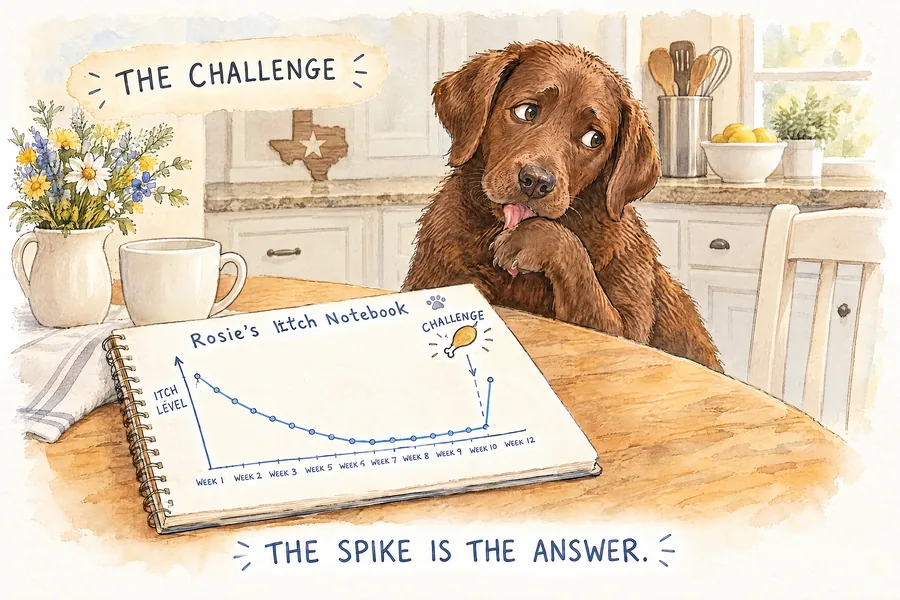 How long does a food trial actually take?A fair food trial for an itchy dog runs 10 to 12 weeks on a prescription diet, then about 2 weeks for the challenge. Why week three is too soon to judge.
 Is it the food, or is it the season?Food allergies and pollen allergies itch in the same spots. The calendar is the best clue you have. How to read it, and what to do next.
Keep one handy
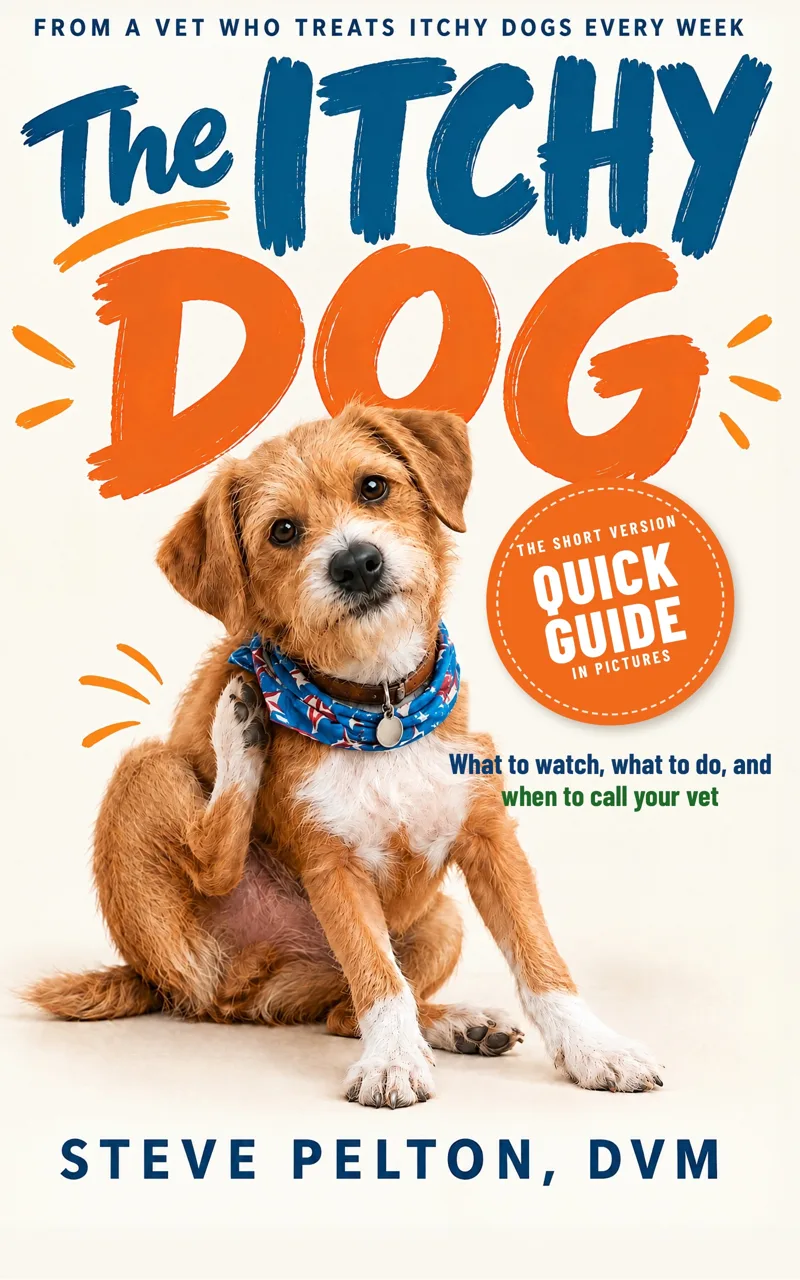 The short versionThe Itchy Dog Quick GuideWhat to Watch, What to Do, and When to Call Your Vet, in Pictures
Want the whole story? The Itchy Dog is on Kindle too. The monthly note lives in the newsletter archive.
Monthly itch-season tips from Dr. Pelton
A short note from me when itch season ramps up, and what I'd tell you in the exam room that month.
I'll never sell your email. Read past issues