
Why does my dog keep getting ear infections?
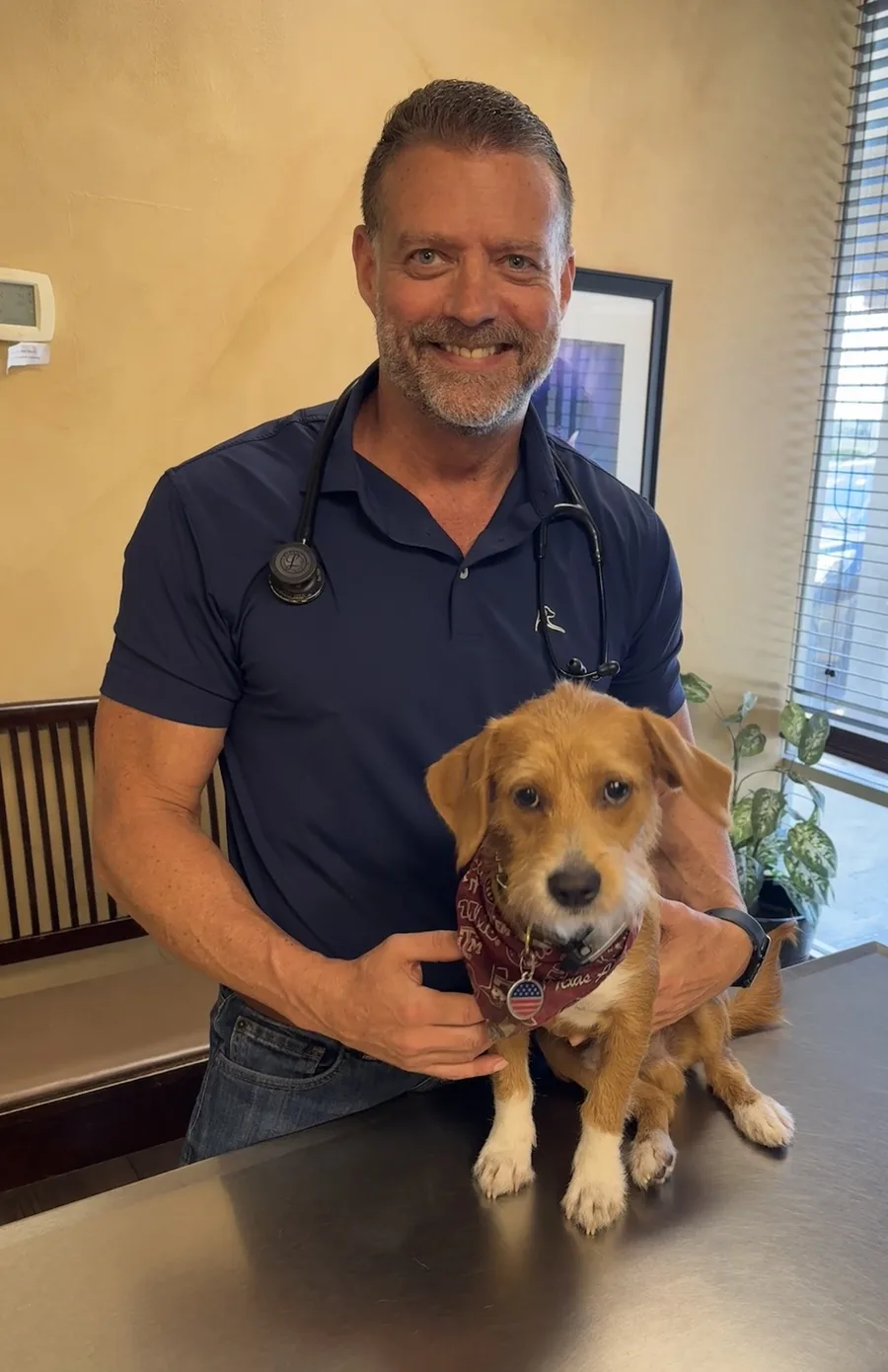
Dr. Steve Pelton, DVM
Hearthstone Animal Clinic, Cypress TX · vet since 2000
Last reviewed by Dr. Steve Pelton, DVM on
Jump to a sectionShowHide
If you've cleaned the ears, finished the drops, and two months later you can smell it again, you're not doing anything wrong. Ears are one of the most common reasons itchy dogs end up in my exam room, and the ones that keep coming back are telling you something.
An ear infection that keeps coming back is almost never bad luck. There's nearly always something underneath it, and most often it's allergy. Ears are lined with skin, the same allergic skin as the rest of the dog.
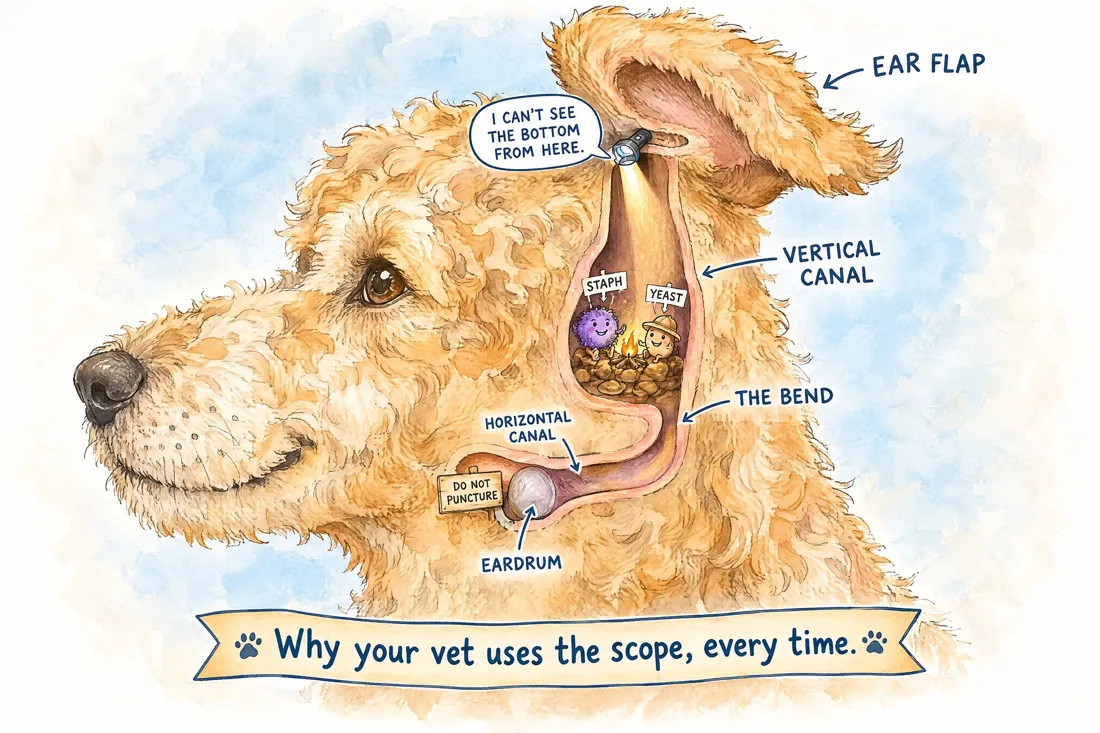
The L-shaped tunnel
A dog's ear canal runs down, then turns in toward the eardrum, like a capital L. The bottom stays warm, dark and damp, which yeast and bacteria love, and you can't see the eardrum from outside. Your vet needs the scope to look around the corner. Here in Cypress, all of summer is ear season.
What a bad ear looks like
- Head shaking, scratching, rubbing on the carpet
- Red, swollen canal; sour or musty smell
- Brown waxy gunk or yellow-green pus
- Pain when you touch it
Leftover drops in the cabinet?
Leftover drops? For a familiar flare, often fine, but call your vet first. If the ear looks different, is very painful or has pus, it needs a look: some drops aren't safe with a damaged eardrum.
When it can't wait: the head tilt rule
- Head tilt with falling, circling or eyes flicking side to side: emergency, get seen now.
- A head tilt with a sore, smelly ear in a dog who's otherwise steady: get seen in the next day or two.
The pattern is the clue
The dermatologist I refer to has an ear handout I really like, and it lines up with what I see every day: when the ears flare tells you a lot about why.
- Ears all year round: think food allergy first. Sometimes ears are the only sign.
- Seasonal ears that turned year-round: classic atopy.
Ears all year? Here's how I run a food trial. Ears that started with the seasons? That's the environment.
Other causes your vet rules out
- Low thyroid
- Cushing's disease
- Skin-oil disorders (greasy, flaky skin)
- A grass awn (foxtail) or other foreign body
- Ear mites, mostly in young dogs
Things that make it easier to get one
- Floppy ears
- Narrow ear canals
- Swimming
- Houston humidity
Why it matters to stay ahead of it
Untreated, an ear changes for good. Ears that stay inflamed for years thicken, narrow and scar, tougher bacteria move in, and at the far end of that road is surgery to remove the ear canal. Catching each flare early and controlling the allergy keeps you off that road.
There's a real photo of what years of ear flares can do on the Why page.
What to do
- Treat the infection AND work up the allergy, or it keeps coming back: fleas, a food trial, atopy.
- Ask how often to clean. More isn't better; over-cleaning can keep an ear sore.
- Once an in-clinic ear medicine goes in, don't clean that ear until the recheck unless your vet says so.
The ear medicines themselves are on the itch meds page, and the itch ladder shows how the allergy work fits together.