
Your marketing BS detector
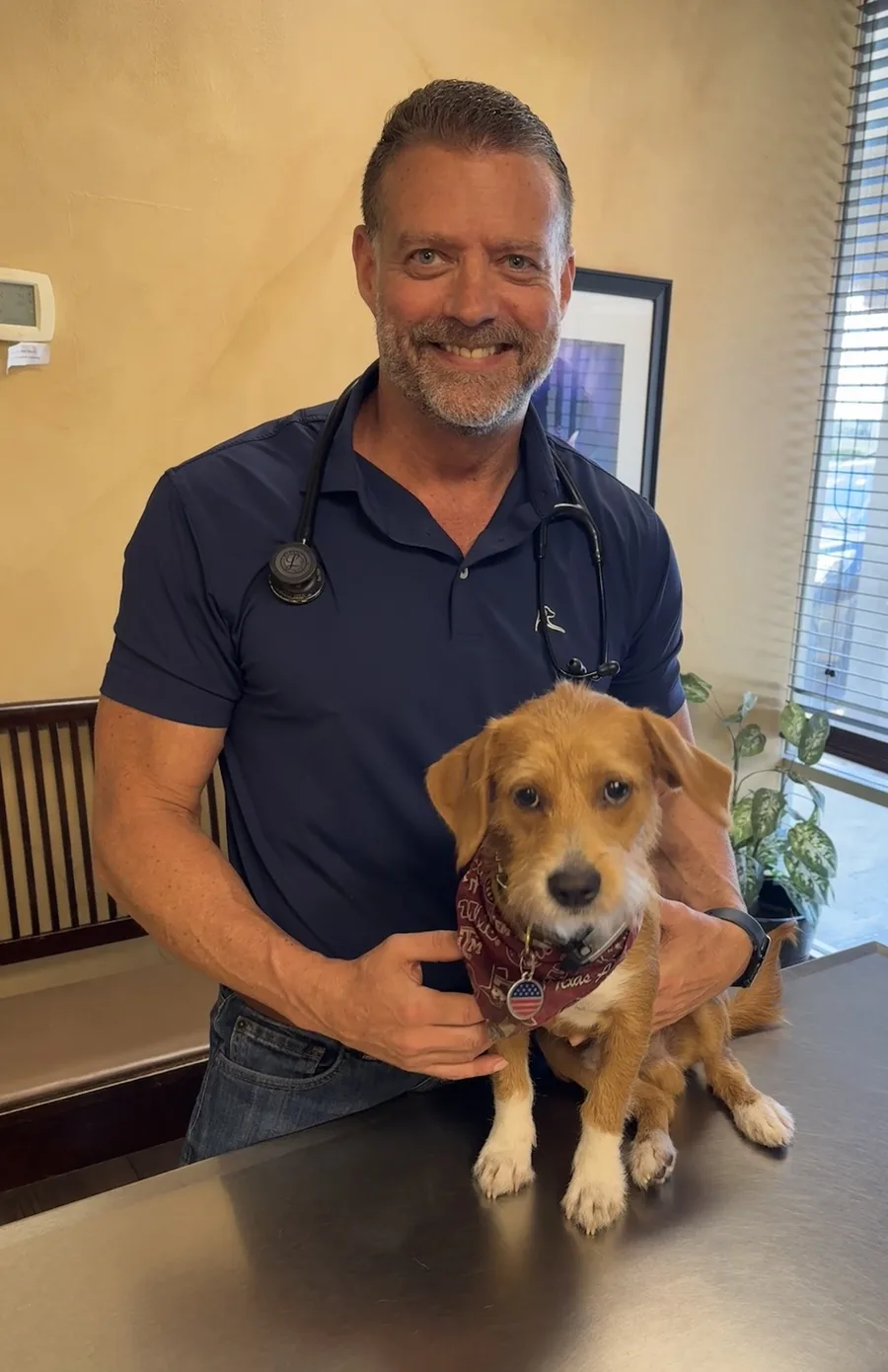
Dr. Steve Pelton, DVM
Hearthstone Animal Clinic, Cypress TX · since 1998
Last reviewed by Dr. Steve Pelton, DVM on
Jump to a sectionShowHide
It's 11 p.m. and the dog is licking again. You're on the couch with your phone, and an ad slides up between a recipe and a friend's vacation photos: a happy dog, a bottle with a green leaf on it, and the words "Finally, itch relief that gets to the ROOT CAUSE." Sixty percent off if you order in the next 14 minutes.
Wanting a gentler, cheaper fix is a good instinct. The ad is built to find people with exactly that instinct, at exactly the hour they're most tired. So here's the filter I use, from my book. Try it on a few sample ads.
Play with it · Chapter 19
Your BS detector
Most bad itch products don't fail in new and creative ways. They use the same dozen moves. Once you know them, they light up like a scoreboard.
Read the sample ad, then tick every tactic you spot. One point for each box the ad or label checks. Be honest; nobody's grading you.
Tick what you spot
0pointsProbably fine, ask your vet
- 0 to 1: Probably just a product. Still ask your vet, especially if your dog is on other medicine.
- 2 to 4: Wallet on alert. Read the rest of this chapter before you click.
- 5 or more: Put the phone down. Go pet the dog. Ask your vet in the morning.
- The last box counts as 5 by itself.
Not a lie detector. A wallet detector. It measures sales pressure, not whether someone's lying.
If you've ever clicked one of those buttons, I want to say this first: that wasn't foolish. You were trying to help your dog, and the ad was made by people who are very, very good at their jobs.
Three questions for anything new
Who's selling it, and what do they get?
That's not an accusation. Everyone selling something makes money, including me. But it tells you whose evidence to check twice. If the only studies come from the company that sells it, that's a reason to wait for someone else to repeat them.
What's the evidence, and is it about this problem in dogs?
Walk down the ladder:
- Was it tested in dogs (not people, mice or a dish of cells)?
- In itchy dogs, with a real diagnosis?
- Against a placebo, with owners who didn't know which one their dog got?
- Did it change the itch, or just a lab value?
- Was it this product, at this dose, or one ingredient in it?
What happens if you're wrong?
This is the one I'd tape to the fridge. If a $20 bottle of fish oil does nothing, you lost $20. If a concentrated oil poisons the cat, or a raw diet brings Salmonella into a house with a newborn, or a dog spends three months scratching himself raw while you wait for a "detox" to work, the cost is a lot higher than the price on the label.
A fair warning about me: drug companies make money on drugs, and my clinic sells medications and prescription food. Be skeptical of me, too. Run my advice through this checklist as well.
The test that sells the fix
An at-home test that sells the fix is my least favorite move on the list, because it looks so much like real medicine. You mail in hair, you get a colorful report, and the report happens to recommend the company's own supplement or food. No blood, hair or saliva test can diagnose allergy in dogs.
I've written up what I'd spend that money on instead: fleas first, then infection, then a proper food trial.
Fine alongside, not instead of
If my dog were itchy and an ad caught me at 11 p.m., I wouldn't buy anything that night. In the morning I'd run it through the checklist. Two points or more and I'd read up before buying; five or more and I'd close the tab. If it passed and I still wanted to try it, it would go alongside his prescribed medicine, never in place of it, with my vet in the loop and nothing else changing at the same time.
If something is harmless, inexpensive and your dog likes it, and his itch is under control with real treatment, I'm not going to talk you out of it. Tell your vet, so it's in the record and nobody's surprised by bloodwork. Change one thing at a time so you can tell what helped. The line I draw is instead of. A remedy that replaces flea control, replaces treatment for an infected ear, or replaces a food trial isn't harmless, even if the bottle is.
Where to go from here
If you're trying to work out why your dog itches in the first place, start with my step-by-step plan, easiest fix first. If you want to know what the prescription options actually do, here's my honest take on the itch meds, costs and side effects included.
Where this comes from
- Dr. Steve Pelton, DVM. The Itchy Dog (2026), chapter 10 (tests that lie), chapter 18 (probiotics and the celebrity aisle) and chapter 19 (your BS detector).
- Coyner K, Schick A. 2019. Veterinary Dermatology. A mail-in hair and saliva allergy test reported positives in fake fur and salt water and didn't agree with itself on repeat samples.
- Olivry T, et al. 2015. Treatment of canine atopic dermatitis: 2015 updated guidelines (ICADA). BMC Vet Res 11:210.
- US Federal Trade Commission. 2022. Bringing Dark Patterns to Light (countdown timers, scarcity claims and subscription traps).
- US FDA Center for Veterinary Medicine. Unapproved animal drugs, and why supplement labels say "supports".