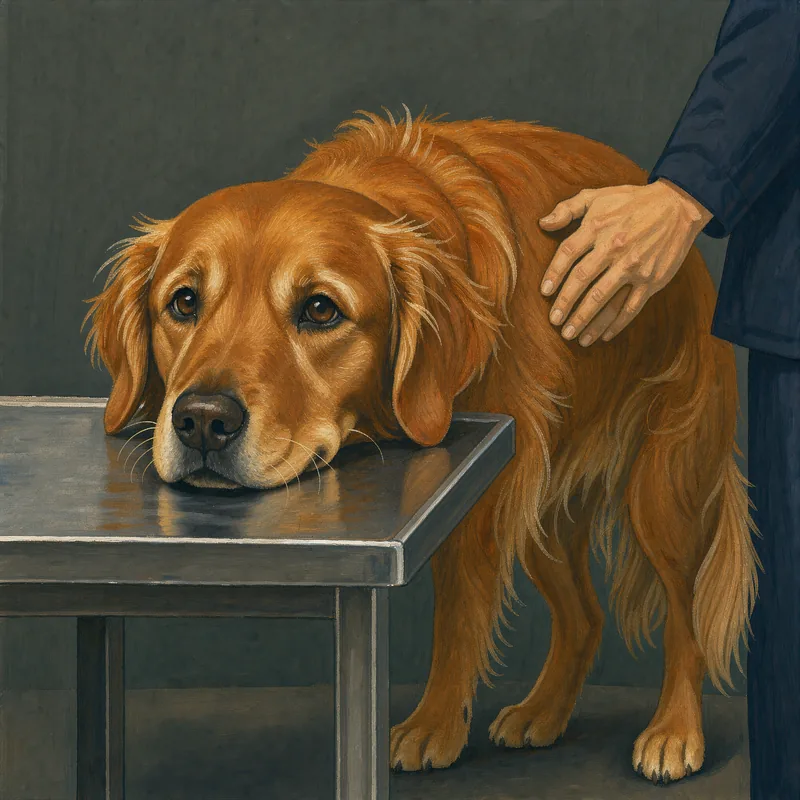


What you can safely do for an itchy dog tonight
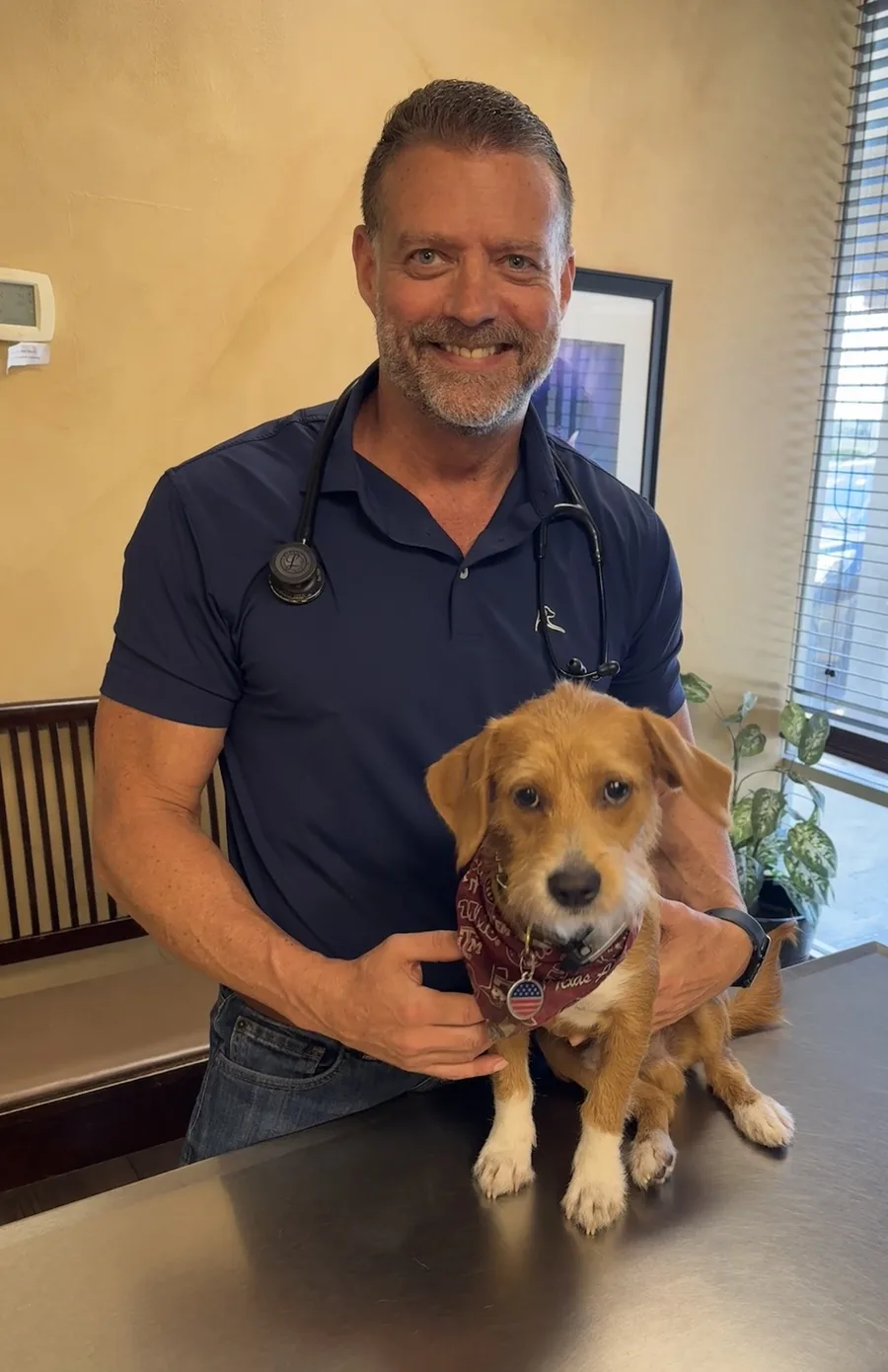
Dr. Steve Pelton, DVM
Hearthstone Animal Clinic, Cypress TX · since 1998
Last reviewed by Dr. Steve Pelton, DVM on
Jump to a sectionShowHide
Tonight in 60 seconds
Go to a vet now, tonight, if:
- Your dog's face, lips or eyes are swelling, or hives are spreading fast.
- Your dog is having any trouble breathing.
- Your dog may have eaten a product with xylitol or a decongestant in it (anything with "-D" on the label).
- Your dog is vomiting, collapsing, or suddenly very weak or wobbly.
- Your dog suddenly tilts their head, loses their balance, walks in circles or has flicking eyes. Stop any ear medicine or antihistamine you've started and call your vet today. If it's severe (can't stand, keeps falling over or is vomiting), go to the emergency vet now.
- The skin is blistering, peeling or coming away in sheets, especially after starting a new medicine.
If not, start with the safe three:
If you're reading this at 2 a.m. while your dog thumps a back leg against the floor, start here. You're tired, they're miserable, and you want to know what's safe to do before morning.
I've been a vet in Cypress since 1998, and I see about ten itchy dogs a day. Almost every one of their owners has already tried something from the medicine cabinet. Some of it helps. Some of it is dangerous. Let's sort that out, then get you both some sleep.
Start with the stuff that can't hurt
These three aren't exciting. They also work better than you'd expect, and you can do all of them tonight.
- 1
A cool bath. Cool water calms hot, angry skin and rinses off the pollen and dust your dog has been rolling around in all day. Plain cool water is fine. If you use shampoo, use one made for dogs and rinse it all out. Keep water out of the ears (a cotton ball in each one helps, just remember to take them out), then dry well, especially between the toes and in any skin folds.
- 2
Wipe the paws. Paws and face are where allergens slip in through the skin. A damp washcloth or an unscented pet wipe after every walk takes a lot of that off before it can start trouble.
- 3
Stop the scratching itself. A cone or a soft recovery suit (the little bodysuit dogs wear after surgery) won't fix the itch, but it breaks the itch-scratch cycle. Scratching damages the skin, damaged skin itches more, and around it goes.
Can I give my dog Benadryl, Zyrtec or Claritin?
This is the question I get more than any other, usually phrased as "can I just give him a Benadryl?" The honest answer is yes, a few human antihistamines are safe for most dogs at the right dose. The other honest answer is that they don't work nearly as well in dogs as they do in people.
In people, allergy itch runs mostly on histamine. In dogs, a big share of it runs on a different signal called IL-31, the "itch cytokine," and antihistamines don't block that. That's the main reason they underperform in dogs.
The research backs that up. In a 2020 study, cetirizine reduced allergic skin reactions in beagles, but oral diphenhydramine (Benadryl) didn't. And in a randomized trial in dogs with chronic atopic dermatitis, two weeks of cetirizine did no better than a placebo.
Antihistamines earn their keep as prevention, and for mild or seasonal itch, hives and bug bites. They're unlikely to settle a bad flare or long-running allergic skin disease on their own. Benadryl does have one honest perk: it can make dogs drowsy, and a drowsy itchy dog sometimes finally sleeps through the night.
If your dog isn't clearly better after one to two weeks on an antihistamine, stop there and see your vet. There are much better tools now, and neither of you should have to tough it out.
Dose by weight
How much can I give my dog?
Pick the medicine, tell me your dog's weight, read the warning, and you'll get the number from my chart.

3. Read this first. Every time.
Call your vet before giving an antihistamine if your dog:
- is pregnant or nursing, or is a young puppy
- has glaucoma
- has heart disease or high blood pressure
- has ever had a seizure
- has trouble peeing, or an enlarged prostate
- has thyroid, kidney or liver disease
- is a senior, or takes any other medicine, including sedatives or anxiety pills
Pick a medicine to start.
General education, not veterinary advice. If your dog is miserable, see your vet.
Is this box safe?
Check the box before you give it
Grab the box from the cabinet. Type what it's called, or tick what's in the Active ingredients list, and I'll tell you what I'd want you to know.
Your answer shows up here once you've ticked what's on the box.
Use plain tablets with ONE active ingredient. Read the whole ingredient list every time.
General education, not veterinary advice. If your dog is miserable, see your vet.
How much to give, by weight
The cetirizine, loratadine and fexofenadine numbers come from the 2023 AAHA allergic skin disease guidelines. The Benadryl numbers are my own protocol. I've rounded everything to whole or half tablets, because nobody should be sawing pills into crumbs at 2 a.m. If you can, weigh your dog instead of guessing. Hop on the bathroom scale holding them and subtract yourself.
Dosing references don't all agree. For loratadine I use the lower, once-a-day dose from the Merck Veterinary Manual instead of the twice-a-day dose in the AAHA guidelines. The cetirizine and fexofenadine charts follow the 2023 AAHA guidelines. If your vet has given you a different dose for your dog, use theirs.
Call your vet before giving an antihistamine if your dog:
- is pregnant or nursing, or is a young puppy
- has glaucoma
- has heart disease or high blood pressure
- has ever had a seizure
- has trouble peeing, or an enlarged prostate
- has thyroid, kidney or liver disease
- is a senior, or takes any other medicine, including sedatives or anxiety pills
Cetirizine (plain Zyrtec)
Cetirizine (plain Zyrtec): about 0.5 to 1 mg per pound, once a day.
| Dog's weight | Give per dose |
|---|---|
| 6 to 11 lb | 1/2 tablet |
| 12 to 22 lb | 1 tablet |
| 23 to 44 lb | 2 tablets |
| 45 to 66 lb | 3 tablets |
| 67 to 88 lb | 4 tablets |
| 89 to 100 lb | 5 tablets |
Under 6 lb or over 100 lb: ask your vet.
Loratadine (plain Claritin)
Loratadine (plain Claritin): about 0.25 to 0.5 mg per pound, once a day.
| Dog's weight | Give per dose |
|---|---|
| 10 to 21 lb | 1/2 tablet |
| 22 to 43 lb | 1 tablet |
| 44 to 65 lb | 1 1/2 tablets |
| 66 to 87 lb | 2 tablets |
| 88 to 100 lb | 2 1/2 tablets |
Under 10 lb or over 100 lb: ask your vet.
Diphenhydramine (plain Benadryl)
Diphenhydramine (plain Benadryl): my protocol is 1 mg per pound, up to twice a day. The AAHA guidelines question how well it works when it's given by mouth, so think of it as the sleepy option more than the itch fix.
| Dog's weight | Give per dose |
|---|---|
| 10 to 18 lb | 1/2 tablet |
| 19 to 31 lb | 1 tablet |
| 32 to 43 lb | 1 1/2 tablets |
| 44 to 56 lb | 2 tablets |
| 57 to 68 lb | 2 1/2 tablets |
| 69 to 81 lb | 3 tablets |
| 82 to 100 lb | 4 tablets |
Under 10 lb or over 100 lb: ask your vet.
Fexofenadine (plain Allegra)
Fexofenadine (plain Allegra): about 2.5 to 4.5 mg per pound, once a day. That's the lower half of the range the AAHA guidelines give, and I keep it there on purpose, because the dog research on fexofenadine is pretty thin.
| Dog's weight | Give per dose |
|---|---|
| 7 to 13 lb | 1/2 of a 60 mg tablet |
| 14 to 26 lb | 1 tablet (60 mg) |
| 27 to 39 lb | 1/2 of a 180 mg tablet |
| 40 to 64 lb | 1 tablet (180 mg) |
| 65 to 100 lb | 1 1/2 tablets (180 mg) |
Under 7 lb or over 100 lb: ask your vet.
Pick one antihistamine and stick with it. Don't stack them, and don't add one on top of anything your vet has already prescribed without asking first.
See your vet if...
Go now, tonight, if:
- Your dog's face, lips or eyes are swelling, or hives are spreading fast.
- Your dog is having any trouble breathing.
- Your dog may have eaten a product with xylitol or a decongestant in it (anything with "-D" on the label).
- Your dog is vomiting, collapsing, or suddenly very weak or wobbly.
- Your dog suddenly tilts their head, loses their balance, walks in circles or has flicking eyes. Stop any ear medicine or antihistamine you've started and call your vet today. If it's severe (can't stand, keeps falling over or is vomiting), go to the emergency vet now.
- The skin is blistering, peeling or coming away in sheets, especially after starting a new medicine.
Book a visit soon if:
- It's not clearly better after one to two weeks on an antihistamine.
- The skin is raw, bleeding, oozing or smells bad.
- The ears are red, smelly, sore or full of gunk, or your dog keeps shaking their head.
- Scabs, bumps or bald patches keep spreading.
- Your dog can't sleep, or won't stop licking or chewing the same spot.
- Your dog seems sick in any other way: not eating, low energy, just not themselves.
- A hot spot (a raw, wet, angry patch) is spreading fast or is too sore to touch. Call first thing in the morning, because these can grow a lot in a few hours.
Most itchy dogs aren't emergencies. They're just miserable, and so are the people trying to sleep next to them. Tonight's job is getting through the night safely. Tomorrow's job is figuring out why your dog is itchy in the first place.
One more thing, because I hear it all the time: if you tried a prescription food for a few weeks and gave up because nothing changed, that wasn't a fair test. A real food trial means at least 8 weeks on that food and nothing else, and it's worth another try with your vet.
Where this comes from
- 2023 AAHA Allergic Skin Disease Guidelines, Table 3 (cetirizine, loratadine, fexofenadine and diphenhydramine doses).
- Merck Veterinary Manual: second-generation antihistamine doses, and antihistamine cautions for dogs.
- VCA Animal Hospitals: diphenhydramine and cetirizine, who should use them with caution.
- Banovic F, et al. 2020. Veterinary Dermatology. Cetirizine vs oral diphenhydramine on allergic skin reactions in beagles.
- Hsiao YH, Chen C, Willemse T. 2016. Journal of Veterinary Science 17:549-554. Cetirizine (3 mg/kg once daily for 14 days) vs placebo in dogs with chronic atopic dermatitis.
- Merck Veterinary Manual, pet owner pages on ear infections and inner ear infections in dogs.
- VCA Animal Hospitals: hot spots in dogs.
- Lecru LA, et al. 2021. Frontiers in Veterinary Science. Drug-triggered skin sloughing (toxic epidermal necrolysis) in a dog.
- Hensel P, et al. 2015. ICADA diagnosis guidelines (a food trial runs at least 8 weeks). BMC Vet Res 11:196.
- Dr. Steve Pelton, DVM: diphenhydramine protocol (1 mg per pound) and clinical experience.
- Weight-to-tablet charts: converted from the doses above and rounded to half tablets. No official dog chart exists.