
The food trial, done right
Dr. Steve Pelton, DVM
Hearthstone Animal Clinic, Cypress TX · vet since 2000
Last reviewed by Dr. Steve Pelton, DVM on
Jump to a sectionShowHide
If you think it might be the food, you're asking the right question. Here's exactly how I run a food trial in my clinic, down to what's allowed in the treat jar, so twelve weeks of work gives you an answer you can trust.
A food trial is the only reliable way to find out whether food is part of your dog's itch. No blood, saliva or hair test can do it.
Picking the diet
- Use a prescription diet. I usually reach for a vegetarian diet or a true limited-ingredient novel protein your dog has never eaten. Hydrolyzed diets, where the protein is chopped too small for the immune system to recognize, work too.
- It has to be prescription grade, or the trial doesn't count. Pet-store "limited ingredient" bags aren't reliable. In one study, all 21 that were tested had meat DNA in them that wasn't on the label.
- Home-cooked works only with a recipe from a veterinary nutritionist.
- The best diet is the one your dog will actually eat for 12 weeks. Taste matters more than the brand.
Feed it for 10 to 12 weeks, and don't judge it at week three. A lot of dogs look about the same at week three, and a lot of owners give up right there. Most of the action happens after the first month.
Can have, can't have
The strictest dermatologists allow nothing but the diet. My clinic uses a slightly gentler list, and I didn't make it up. It's the one I hand my clients, from the veterinary dermatologist I refer to, with my safety notes added.
Can have
- The trial diet, first. Count out the day's kibble in the morning and treat from that. The canned version, frozen in a stuffable toy, makes a very good treat.
- Plain canned pumpkin (never pumpkin pie filling) and unsweetened applesauce
- Brown or white rice, and baked white or sweet potato, plain and dry, no fixings. Never raw or green potato.
- Plain canned beans, which are already cooked. No baked beans or black-eyed peas, and never raw dried beans.
- Fruit, fresh or frozen, a few pieces at a time, since it's sugar. No canned fruit in syrup. No grapes, raisins or currants, and no pits, seeds, cores or stems.
- Veggies, cooked or raw, except corn. No onions, garlic, chives or leeks (powders too), and no wild mushrooms.
- Peanut butter without soybean oil or corn syrup. No mixed nut butters.
Can't have
- Any meat, including meat flavoring: beef, chicken, pork, turkey, liver and the rest
- Any fish, including fish oil
- Dairy or eggs
- Wheat
- Soy
- Corn, including corn syrup and corn starch
On Purina HA and seeing soy and corn starch on the bag? That's fine. The soy is hydrolyzed, which is the whole idea of the diet.
Read every label for xylitol, also sold as "birch sugar." It turns up in some peanut butters and sugar-free applesauce, and like grapes, raisins, onions and garlic, it's dangerous for dogs, trial or not.
My tip: pick one or two. Every extra is one more thing that could muddy the answer. So pick one or two from the list, keep them the same the whole trial, and write them down. Keep them small, well under a tenth of what he eats in a day. If the result is unclear, they're the first thing we drop. On a hydrolyzed diet, any whole food is a new protein, so ask first.
The sneaky stuff
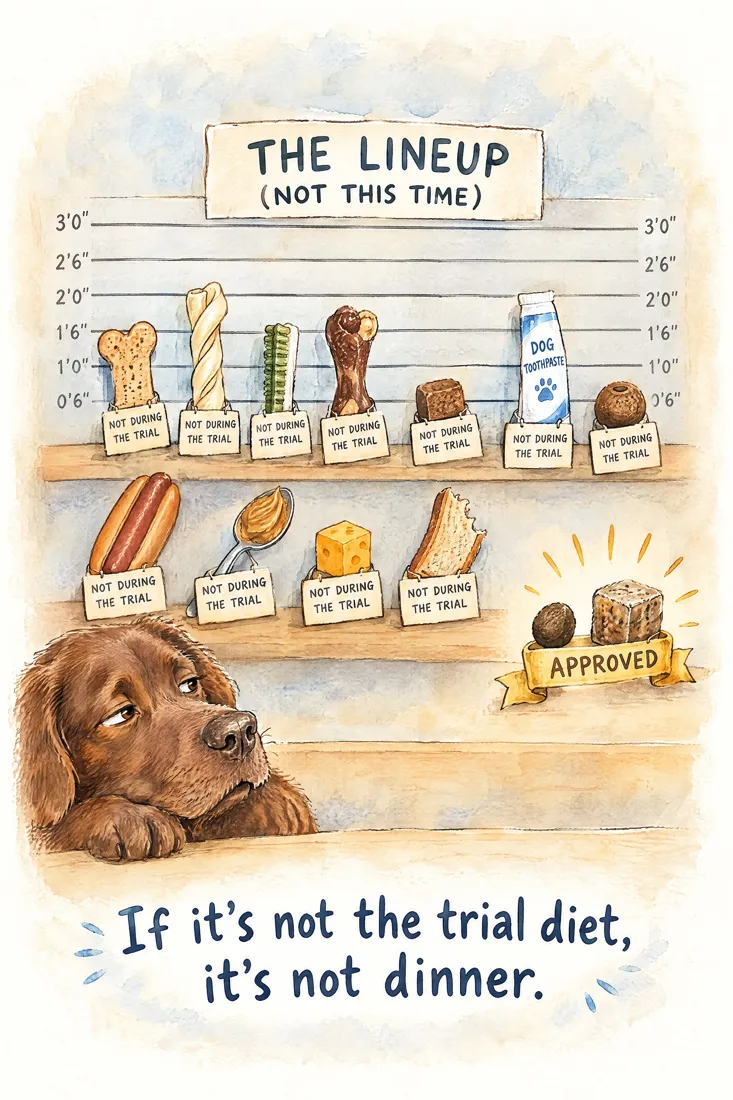
The can't-have list hides in places nobody thinks of as food.
- Flavored heartworm, flea and tick chews
- Gelatin capsules, usually beef or pork
- Fish oil, and joint, probiotic and vitamin chews. Ask whether there's a plain version.
- Flavored toothpaste, which usually tastes like poultry or beef (and never human toothpaste)
- Pill pockets, cheese, hot dogs and deli meat
- Dental chews, rawhide, bully sticks and flavored antlers
- The other pets' bowls, the cat's above all
- Table food, licked plates, the kids' dropped crusts, and scavenging on walks (poop-eating counts)
Pills and treats
Hide the pill
These hide a pill without breaking the trial: peanut butter (no xylitol, soybean oil or corn syrup), cooked white or sweet potato, berries, plain canned pumpkin, banana, or oatmeal or rice. Pick one hider and use it the whole trial. It counts as one of your extras.
Make the treat
The clinic's homemade oat treats
- 1 cup coconut, flax seed or olive oil
- 1 1/2 cups brown sugar
- 1/2 cup sugar
- 1/4 cup unsweetened applesauce
- 2 1/2 cups oat or rice flour (HEB carries it)
- 1 teaspoon each of salt, baking soda and cinnamon
- 3 cups old-fashioned oats
Bake at 400 degrees F for 10 to 12 minutes. They're sweet, so keep them small. Use the same oil every batch, and check the applesauce for xylitol.
Heartworm and flea prevention: don't stop it
- Never stop heartworm or flea prevention during the trial. In Texas, that's not optional.
- Flavored heartworm and flea chews generally contain beef, pork or soy protein, and Heartgard Plus is a real-beef chewable. Most veterinary dermatologists will have you switch to a topical product for the trial (Revolution or Imoxi, for example). A topical isn't as good on fleas, but it removes all doubt.
- For most dogs I'm fine keeping them on their usual chew. For a really bad case, a dog I suspect is beef-allergic, or a trial that has to be as strict as it can be, I'd go topical only, the way the dermatologist would.
- Either way is OK. Decide with your vet before you start, and whatever you use, it has to be made for that species and weight.
If he cheats
One cheat resets the clock. A food-allergic dog can flare within a day or two of eating the problem protein, and the skin then needs time to calm back down. It happens in the best homes. If it does, don't hide it, and don't beat yourself up. Write it in the notebook and call your vet. It may only cost a week or two, not the whole trial.
It's fine, and normal, to treat infections and control the itch at the start so he isn't miserable. Don't stop any itch medicine on your own; your vet will plan when it comes off so you can read the result.
After 12 weeks
If he gets better, the trial isn't finished. Going back to the old food (the challenge) is what proves it. If he doesn't get better after a clean trial, that's still an answer. Food becomes very unlikely, and that points to atopy.
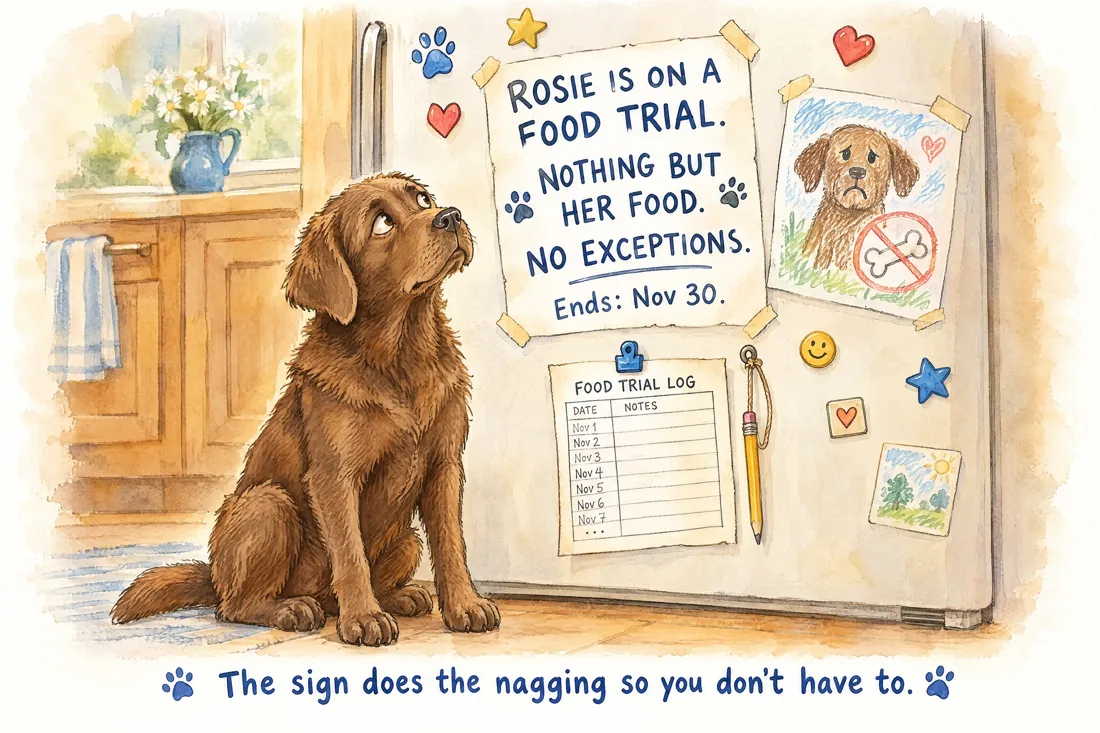
Want to see how the twelve weeks play out? Play Rosie's food trial, and print the 12-week food trial log for the fridge. If food turns out not to be the answer, the itch ladder shows what comes next.