

Why does my dog lick his paws after a walk?
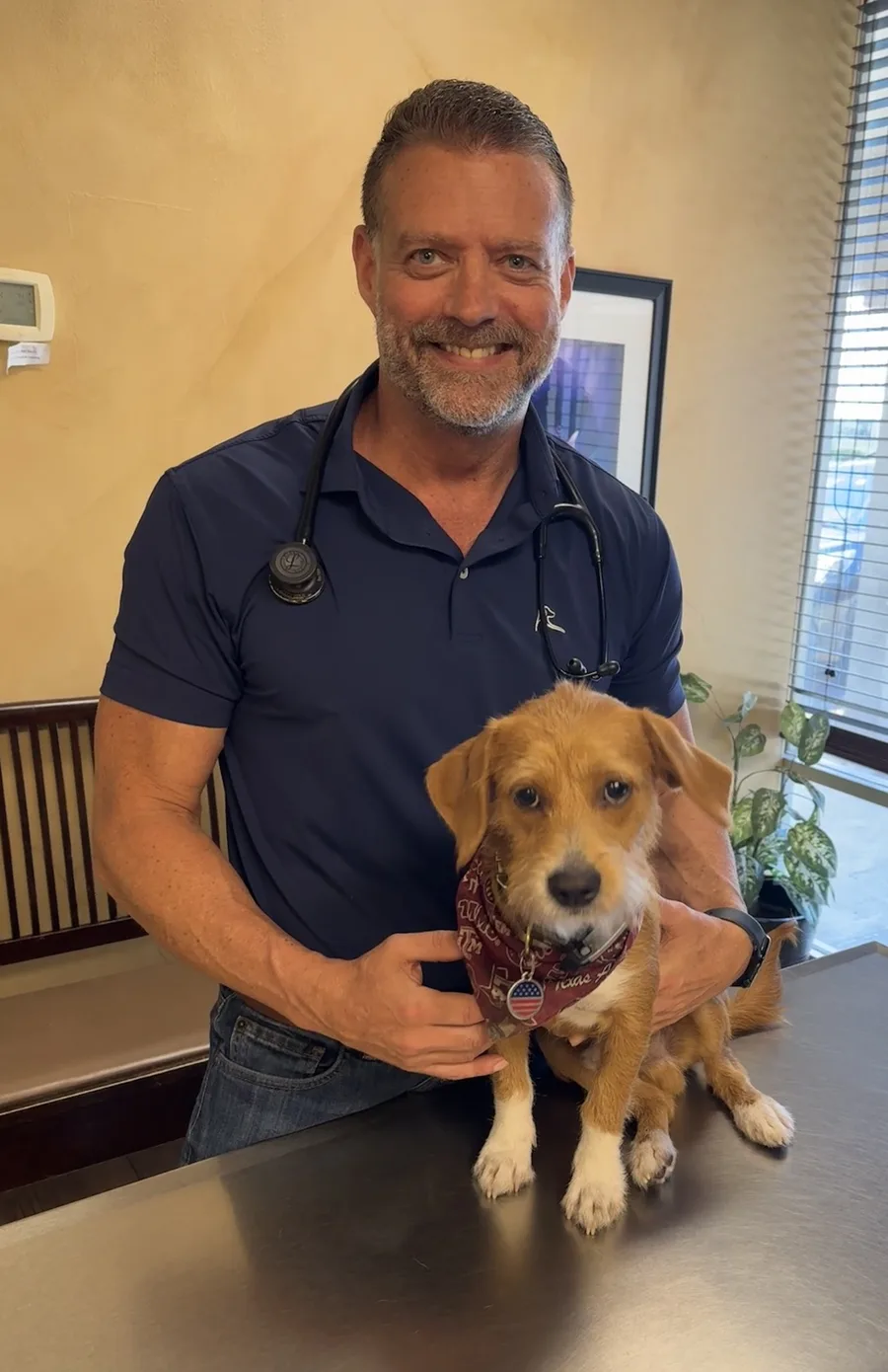
Hearthstone Animal Clinic, Cypress TX · vet since 2000
Why does my dog lick his paws after a walk?
Paw licking is one of the things I get asked about most in my Cypress exam room, and when it starts right after walks, that timing is a pretty good clue.
Most of the time it's allergies. Pollen, grass and mold spores settle on everything your dog walks through, and his feet are the first skin to touch it. The paws and face are where allergens slip in through the skin, so he comes home itchy and does the only thing a dog can do about it.
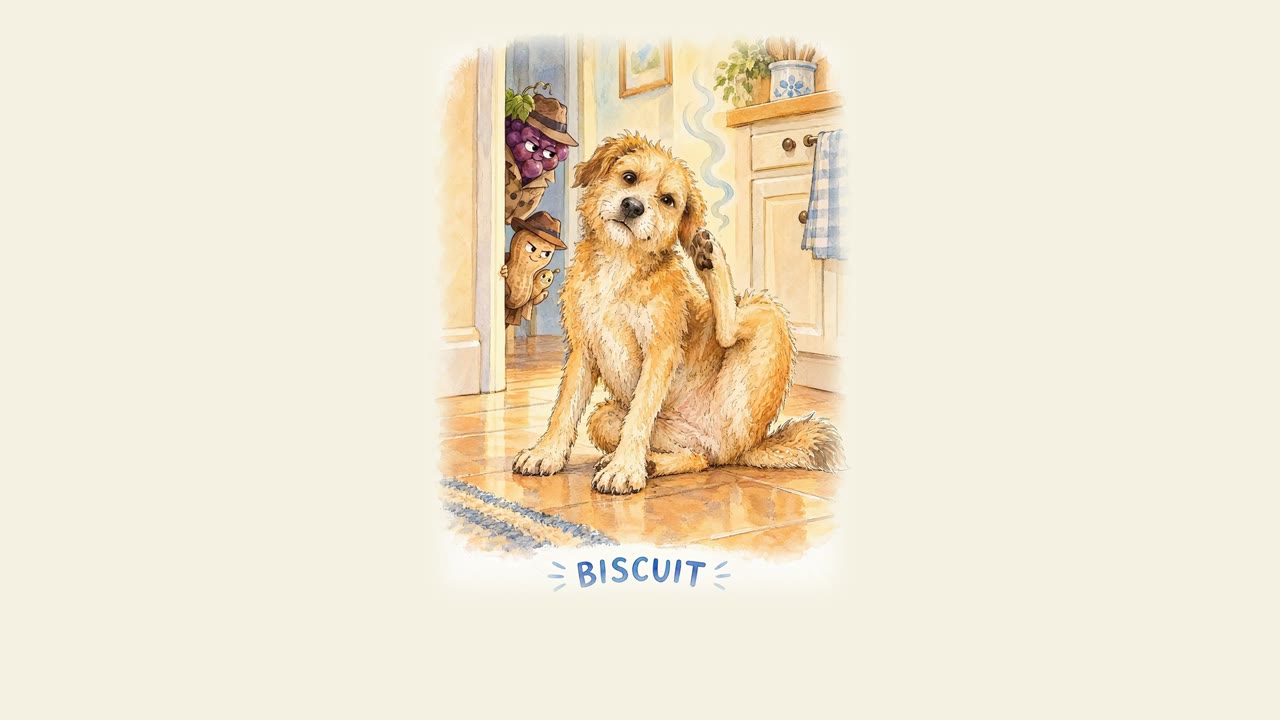
Take Tank. He's made up, but his pattern is real: every October walk ends with him flat on the kitchen floor, working on his front feet.
Why do the paws itch first?
It comes down to how the skin is built. The paws, ears, face, armpits, belly and groin have more mast cells (the allergy cells), thinner skin, warm folds, and the most contact with the world. That's why I think allergies first when a dog works on those spots, whether the trigger turns out to be pollen or food.
The veterinary dermatology guidelines agree. In allergic dogs the itch often shows up as licking and chewing, and itchy front feet are one of the clues they use to spot allergic skin disease.
Right now, around Houston, a walk is a walk through ragweed and mold. (Cypress has no pollen calendar of its own, so I go by Houston's.) The itch forecast shows what's in the air in your ZIP today.
Could it be something other than allergies?
It can, and where he licks helps sort it out. Front feet, ears, face, armpits or belly point toward allergies first. The rump, lower back and base of the tail point toward fleas first, even if you've never seen one, and plenty of dogs have both. The Where's the itch? map shows what each spot usually means.
Itch that comes and goes with the seasons points toward pollen. Itch that never lets up points toward something that's always there, like food or fleas. And if it's one foot, all of a sudden, and he's favoring it, that isn't the usual allergy picture. Have your vet look at that foot.
What does it mean when the paws smell like Fritos?
That corn-chip smell usually means an infection has moved in on top of the allergy. Allergic skin is easy pickings for yeast and staph bacteria, and the infection itches all by itself, so now he's licking for two reasons. Yeast tends to look greasy and red and smells musty. On a light-colored dog, the fur between the toes can turn rusty from all the licking, and the diagnosis guidelines note that kind of saliva staining often goes along with yeast.
This is where a visit earns its money. Your vet presses a slide on the skin and checks it under the microscope for yeast, staph or something tougher, because each needs different treatment. It's a quick test, and it keeps you from paying for the wrong medicine. They'll keep coming back, though, as long as the allergy underneath isn't controlled.
What can I do when we get home from a walk?
Wipe the paws. A damp washcloth or an unscented pet wipe after every walk takes a lot of that pollen off before it can start trouble. It costs next to nothing and takes about 30 seconds. On high-pollen days, do the belly too, then dry well between the toes.
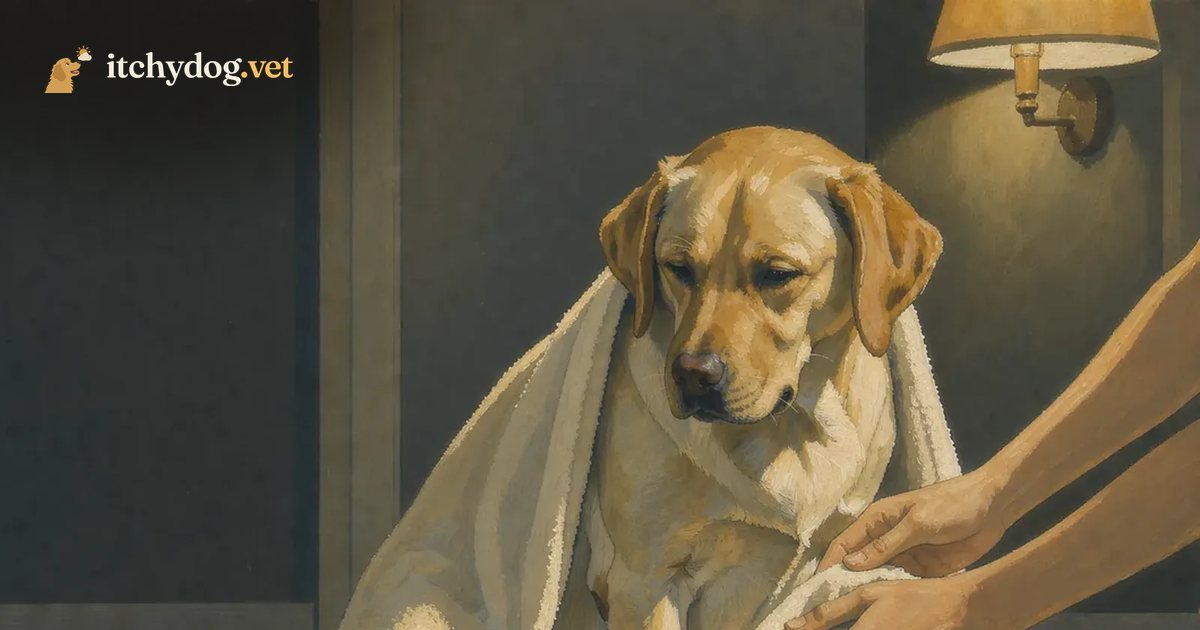
If he's licking hard enough to hurt the skin, a cone or a soft recovery suit breaks the cycle, because damaged skin itches more. None of this cures an allergy. It's the cheap, safe first step, and if the licking is still going strong after a couple of weeks, the next step is a visit.
When is paw licking a reason to call?
If he's still himself and the skin isn't raw, you can watch and wipe. Call when the skin changes, or when he does. The full list is on Itchy tonight.
For the whole picture in one place, The Itchy Dog Quick Guide covers what to watch, what to do, and when to call your vet, in pictures. If you'd like a short note from me when the season turns, the itchydog.vet newsletter is free.
Sources
Hensel P, Santoro D, Favrot C, Hill P, Griffin C. Canine atopic dermatitis: detailed guidelines for diagnosis and allergen identification. BMC Veterinary Research 2015;11:196.
Questions owners ask
- Why does my dog lick his front paws after walks?
- Usually allergies. Pollen, grass and mold land on the feet first, and paw skin has more allergy cells, thinner skin and the most contact with the world, so it reacts. Wiping the paws after every walk takes a lot of that off.
- Why do my dog's paws smell like corn chips?
- That smell usually means yeast or bacteria have moved in on top of an allergy, and the infection itches all by itself. Your vet can check a sample under the microscope to see which one it is, because they need different treatment.
- When should I take my dog to the vet for paw licking?
- Call if the skin is raw, bleeding, oozing or smells bad, or if he won't stop licking the same spot. Go now if his face, lips or eyes swell, hives spread fast, or he has any trouble breathing.
More from the blog
Keep one handy
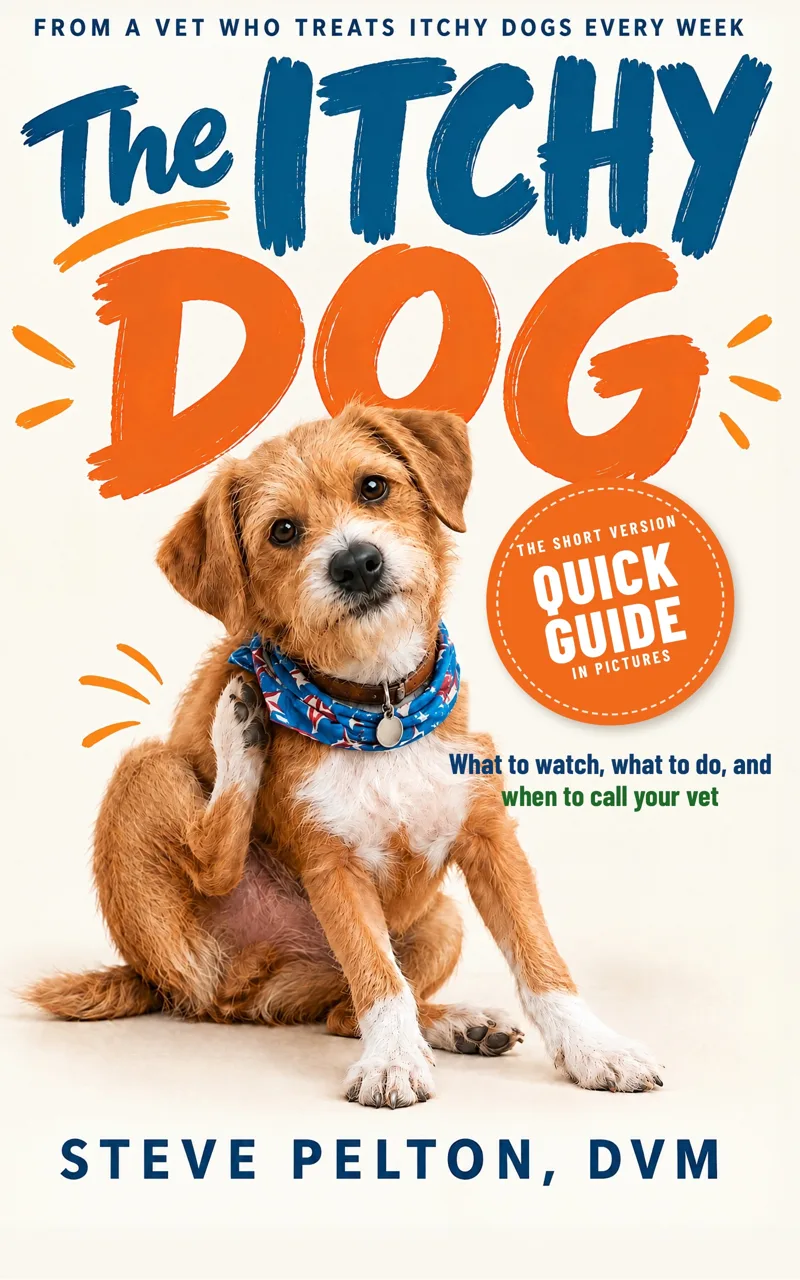 The short versionThe Itchy Dog Quick GuideWhat to Watch, What to Do, and When to Call Your Vet, in Pictures
Want the whole story? The Itchy Dog is on Kindle too. The monthly note lives in the newsletter archive.
Monthly itch-season tips from Dr. Pelton
A short note from me when itch season ramps up, and what I'd tell you in the exam room that month.
I'll never sell your email. Read past issues